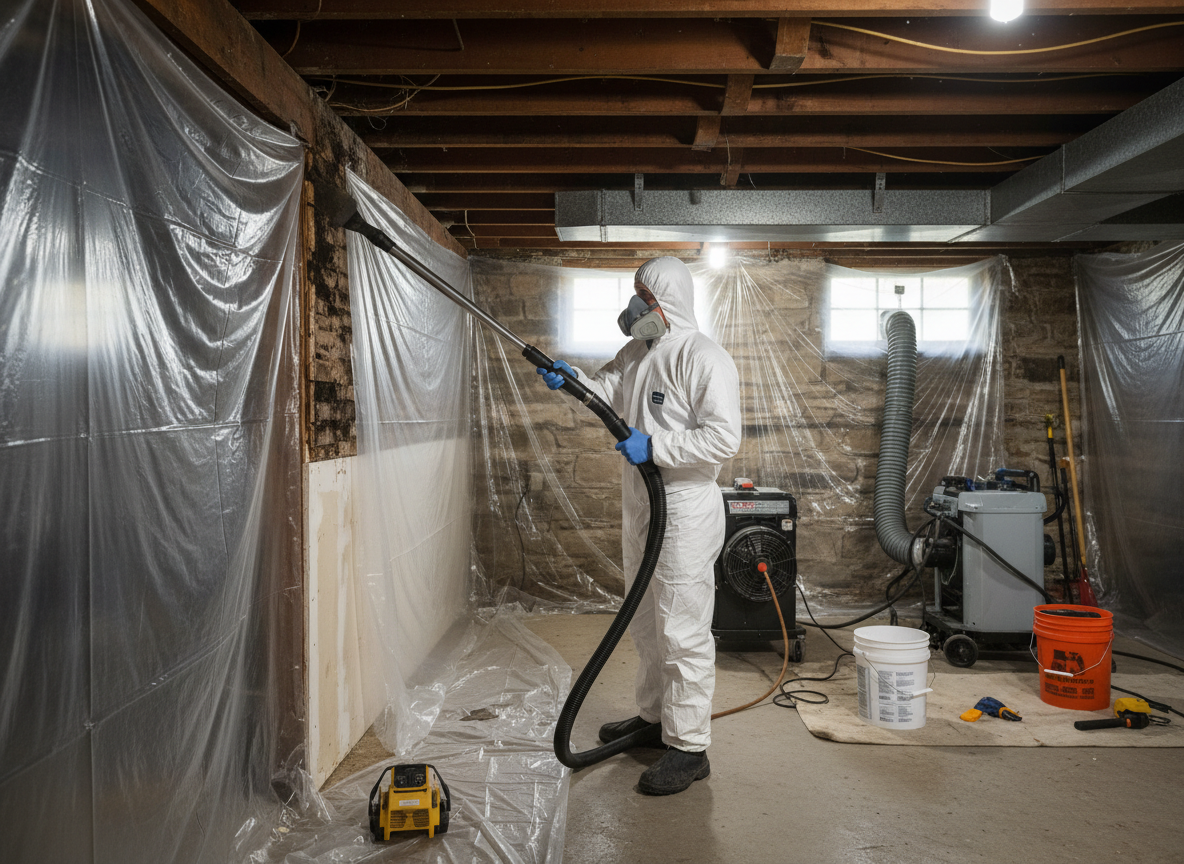
Sugarloaf sits at elevation in San Bernardino County with cold winters that bring heavy snow followed by rapid spring melt. This cycle drives moisture into crawl spaces and attics of older cabins and A-frame homes common throughout the area. Professional mold removal here starts with mapping every moisture source rather than simply spraying visible growth. Technicians often find hidden colonies behind knotty pine paneling or under subfloors where meltwater has wicked upward from the ground. Proper containment is essential because mountain homes frequently share air with neighboring structures through common rooflines and crawlspace vents.
Warm summer days in the San Bernardino National Forest corridor create another pattern: warm moist air meeting cold surfaces in shaded north-facing rooms. This condensation cycle repeats nightly and feeds mold on window frames and insulation. Removal work must account for the tight access typical of Sugarloaf lots built on steep terrain. Equipment has to be carried in by hand, and negative air machines are positioned to avoid pulling spores into living spaces shared with pets or seasonal renters. Every job ends with a moisture meter check on structural wood because residual dampness from winter snow will restart growth within weeks if left above 15 percent.
Running Springs and Big Bear Lake properties experience similar conditions but Sugarloaf cabins tend to be older with less modern vapor barriers. That age difference means more plaster and lathe or particleboard that absorbs and holds water longer. Professional mold removal protocols therefore include selective demo of affected materials rather than surface treatment alone. Homeowners are advised to schedule inspections after the first major snow melt each year rather than waiting for visible spots on ceilings.
Technician insight
In Sugarloaf, the thing that catches most people out with professional mold removal is assuming the problem is only where they see black spots on the ceiling. Snow melt from the roof edge runs under the siding on these older cabins and pools against the north wall framing for months. By the time growth shows inside, it has already traveled several feet along the sill plate toward the San Bernardino National Forest side of the house.
Attic Mold After Spring Melt
A Sugarloaf cabin near the national forest boundary showed ceiling stains after heavy March snow. Inspection found meltwater had entered through a blocked gutter and traveled along rafters into insulation. We removed saturated sections, treated the framing, and improved attic ventilation to handle future freeze-thaw cycles.
How it works
- 1
Initial Assessment
Technician arrives 24/7 and uses moisture meters plus thermal imaging to locate all affected zones in the Sugarloaf property.
- 2
Containment Setup
Plastic barriers and negative air machines isolate the work area to prevent spore migration through the home or into neighboring cabins.
- 3
Removal and Cleaning
Damaged materials are removed, surfaces are treated with appropriate antimicrobials, and HVAC components are cleaned if mold has entered ducts.
- 4
Drying and Verification
Dehumidifiers and air movers bring moisture levels down, followed by post-remediation testing before barriers come down.
- 5
Prevention Guidance
Homeowner receives specific recommendations for ventilation and drainage tailored to Sugarloaf's freeze-thaw cycles and forest proximity.
Pricing
Upfront quotes provided after on-site inspection; cost varies with extent of hidden damage and access challenges common on steep Sugarloaf lots.