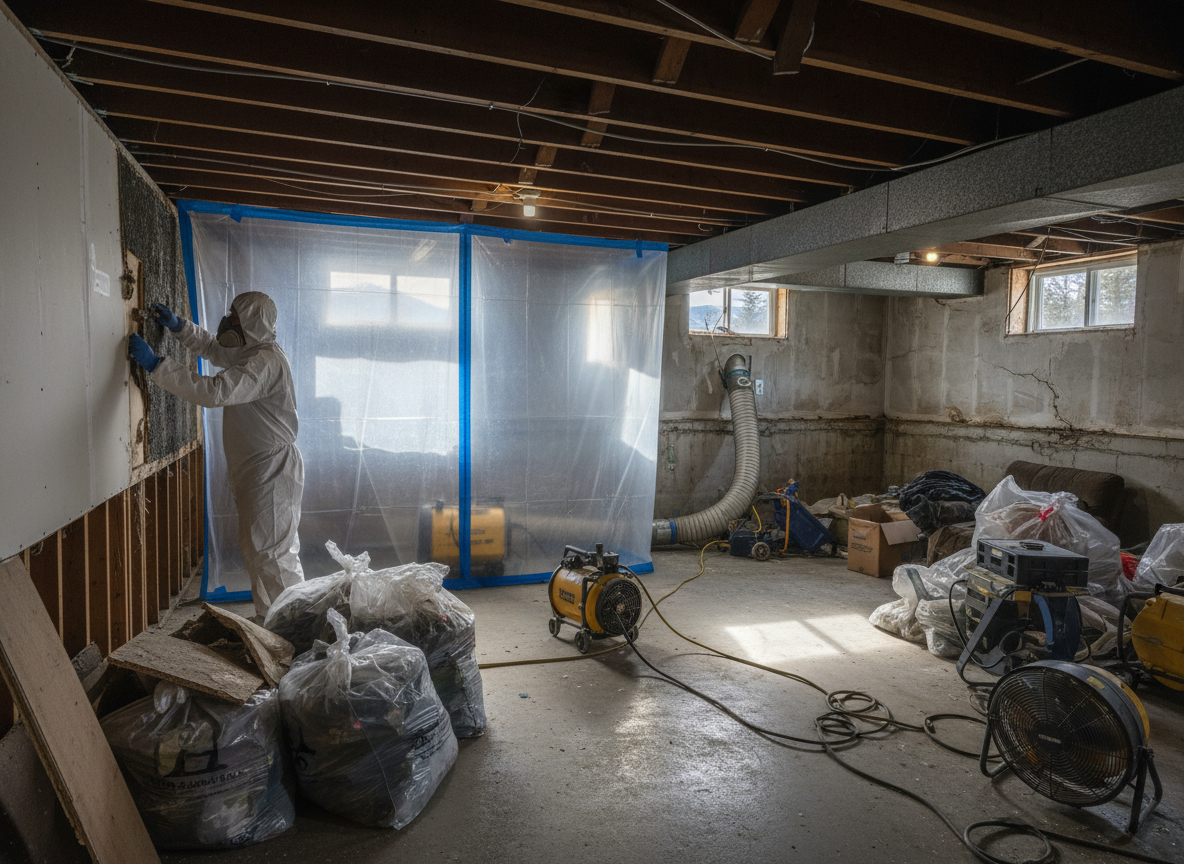
Running Springs sits at higher elevation along Highway 330, where winter snowpack melts against older cabin foundations and crawl spaces. Homes here often feature raised wood floors and limited grading, letting moisture linger under structures through spring thaw. Our team from Sugarloaf responds directly to these properties, using containment suited to narrow driveways and steep lots common off Deer Lick Road and Maple Springs Lane.
Warm summer days followed by cold nights create condensation cycles inside poorly ventilated mountain homes. We see recurring growth in bathrooms and laundry areas where exhaust fans vent into cold attics. Addressing the source requires checking roof leaks from heavy snow load and ensuring proper drying before any sealing work.
Access to Running Springs properties can close quickly during storms, so we stage equipment locally and prioritize calls from the 92382 zone first. This keeps response times short for residents dealing with sudden water intrusion from overflowing gutters or ice dams.
Around Running Springs
We regularly work near:
- 📍Running Springs Elementary School
- 📍Running Springs Post Office
- 📍Highway 330
- 📍San Bernardino National Forest boundary
- 📍Running Springs Fire Station
Mold Remediation Service Sugarloaf in Running Springs — Local Notes
- •Steep driveways and limited turnaround space require smaller equipment and extra containment barriers when working off Highway 330 side roads.
- •Older cabins built before modern vapor barriers trap meltwater under floors, so inspections focus on joist ends and insulation near the ground line.
- •Heavy winter snow followed by rapid warm-ups sends water toward foundations faster than drainage ditches can handle on lots along Running Springs Road.
- •Cold attic temperatures cause bathroom exhaust to condense inside, creating hidden mold along ridge vents that only shows after spring inspections.