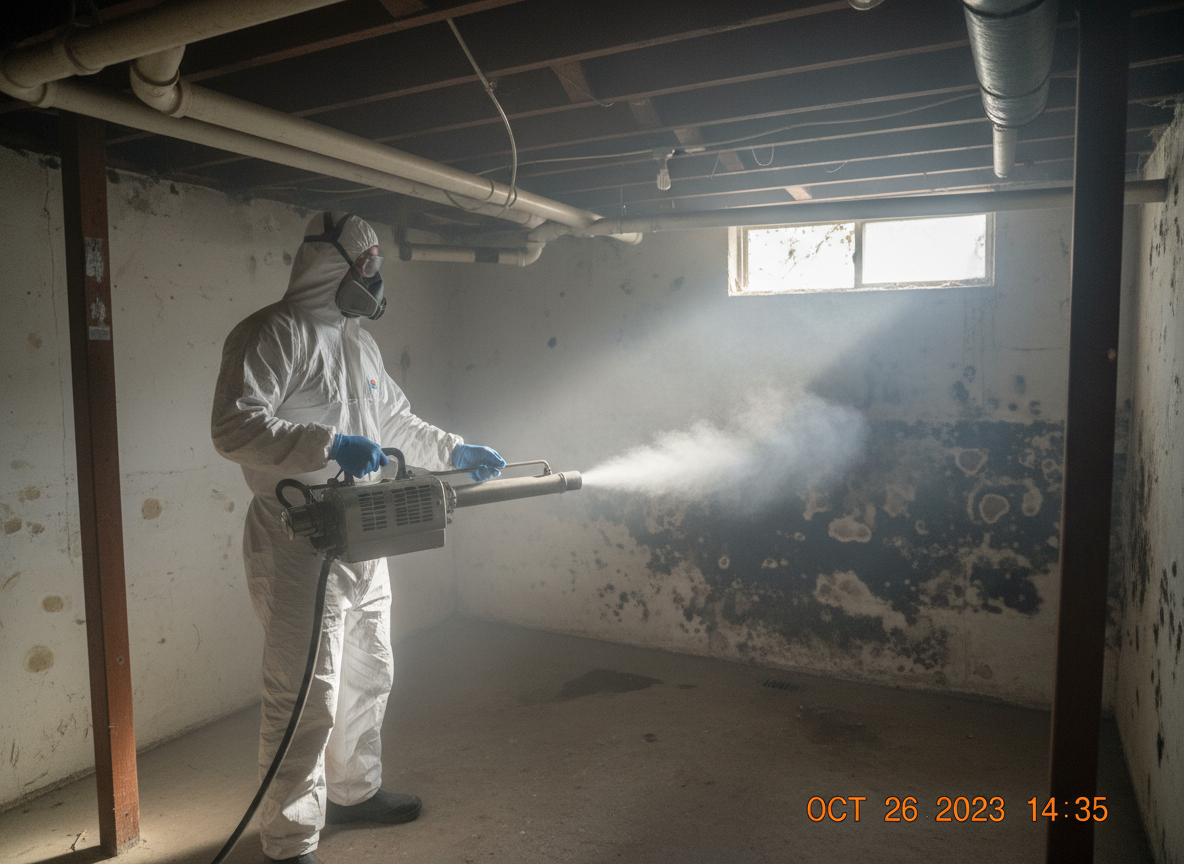
Mold fogging treatment disperses EPA-registered antimicrobial agents as a fine mist to penetrate cracks and voids in attics, crawl spaces, and wall cavities common in Sugarloaf cabins. These older wood-frame structures built against the San Bernardino National Forest slopes often trap condensation when warm summer days meet cold winter snow loads. The process requires sealing the area first, then applying the fog at specific dwell times to kill surface and airborne spores without leaving residue that could affect indoor air once residents return. Technicians monitor humidity levels because the local mountain climate swings from dry summers to heavy spring melt that reintroduces moisture through rooflines and foundations.
Edge cases arise when fog reaches electrical boxes or HVAC returns in homes near Running Springs and Big Bear Lake, where older ductwork can spread spores if not isolated beforehand. San Bernardino County building practices in these forested zones frequently include minimal vapor barriers, so fogging alone may not address hidden growth behind insulation without follow-up inspection. Crews use PPE rated for the chemicals and ventilate thoroughly afterward to avoid lingering odors that can bother sensitive residents during cold snaps when windows stay closed.
Homeowners sometimes mistake surface cleaning for full remediation, yet fogging only works after fixing the water source such as ice dam leaks or poor grading on sloped lots. In Sugarloaf the combination of dense tree cover and winter snow creates repeated wetting cycles that demand repeated treatments if the underlying leak remains unaddressed.
Technician insight
In Sugarloaf the thing that catches most people out with mold fogging treatment is how spring snowmelt from the San Bernardino National Forest runs under older cabin foundations and re-wets framing before the fog even settles. Homeowners clean the visible spots on drywall but skip sealing the uphill side of the lot, so the same colonies return the next cold snap.
Attic spores after winter thaw
A Sugarloaf homeowner noticed musty smells in the upstairs bedroom once snow melted off the roof. Inspection found condensation behind insulation where meltwater had entered through a ridge vent gap. We sealed the attic, applied fog through the joist bays, ventilated for two hours, and confirmed clearance with surface samples.
How it works
- 1
Site Assessment
Inspect affected rooms, measure moisture in walls and attics, and identify entry points from snow melt or forest humidity.
- 2
Containment Setup
Seal doorways, HVAC returns, and vents with plastic sheeting to keep fog contained within the treatment zone.
- 3
Fog Application
Release antimicrobial fog into cavities and living spaces, allowing required dwell time for spore neutralization.
- 4
Ventilation and Clearance
Air out the home, test surfaces, and confirm spore levels before reopening to occupants.
Pricing
Cost depends on square footage treated, number of rooms, and whether hidden cavities require extra access.