Sugarloaf sits at elevation in San Bernardino County with cold winters that bring heavy snow and warm summers that drive rapid melt. Water from roof edges and attic vents often finds its way behind cedar siding or into crawl spaces of older cabins and A-frame homes built before modern vapor barriers. Once moisture sits against insulation or subfloor plywood for even a few weeks, mold colonies establish quickly in the low airflow typical of these tightly packed mountain lots.
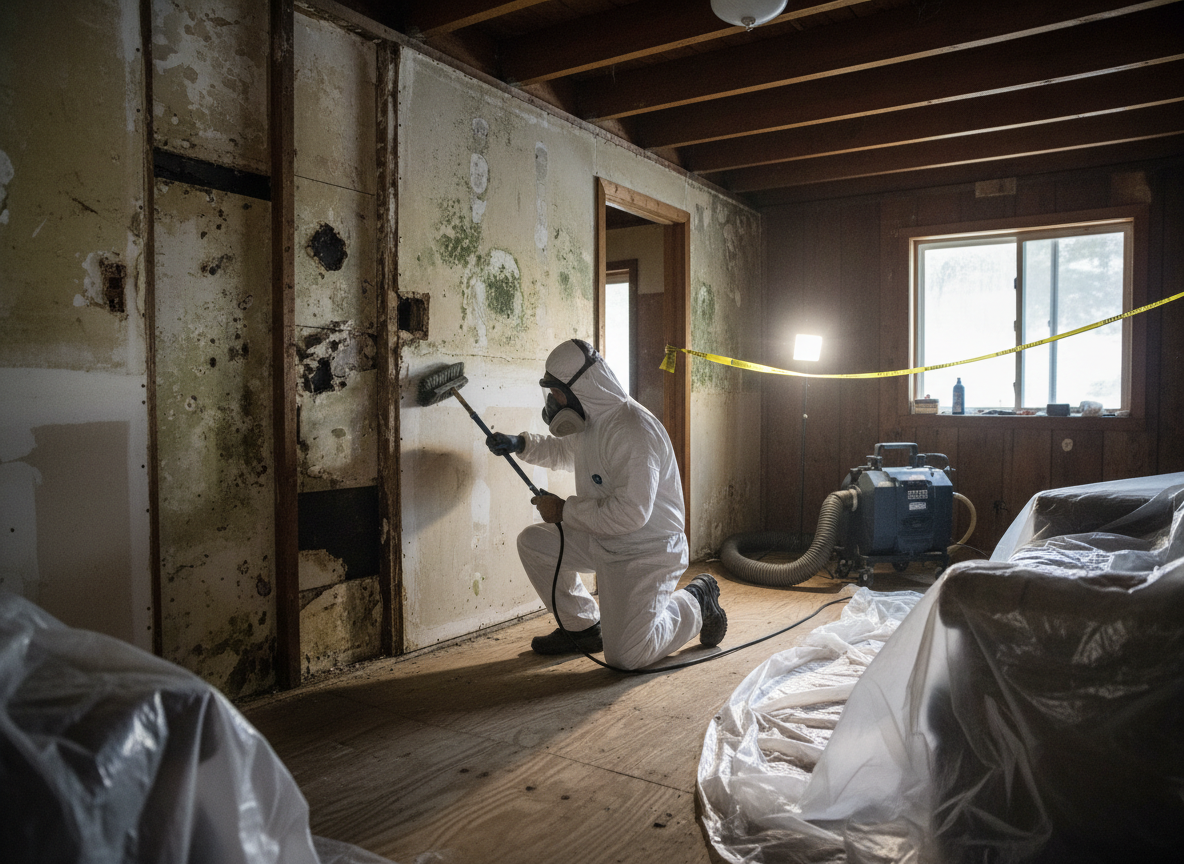
Abatement here starts with isolating the affected zone using negative air machines vented outside, because the surrounding San Bernardino National Forest means any spores released can travel into neighboring properties or the nearby Running Springs and Big Bear Lake areas. Technicians remove saturated drywall, carpet pad, and insulation down to the studs, then treat framing with antimicrobial solutions rated for wood in high-humidity cycles. Drying follows with commercial dehumidifiers sized for the smaller square footage of most Sugarloaf residences, preventing re-growth when the next cold snap arrives.
Edge cases include mold that has traveled along shared walls in duplexes or into the foam insulation common in post-1980s builds near the forest boundary. In these situations, simply cutting out visible growth leaves hidden colonies that reactivate during spring thaw. Full removal requires pulling back adjacent finishes and documenting moisture readings at every step so the homeowner can see the actual extent before any reconstruction begins.
Technician insight
In Sugarloaf the thing that catches most people out with mold abatement is snow melt running under the eaves and into the attic during the first warm spell after a heavy winter. Homeowners often think the problem is fixed once the roof is shoveled, but the water has already wicked into the insulation and sheathing on the north-facing walls that stay shaded longest.
Attic Mold After Winter Snow Melt
A Sugarloaf cabin near the national forest boundary showed dark staining on ceiling drywall after the first spring thaw. Inspection found meltwater had entered through a blocked gutter and traveled along rafters into fiberglass batts. Crews removed the wet insulation, treated the rafters, and ran drying equipment for three days until readings stabilized. Follow-up sampling showed no remaining growth.
How it works
- 1
Initial Assessment
Technicians arrive within hours, map visible growth, and use moisture meters on walls, ceilings, and floors while noting any signs of past snow-melt intrusion common in Sugarloaf homes.
- 2
Containment Setup
Plastic barriers and negative air machines isolate the work area so spores do not spread into living spaces or the surrounding forest edge properties.
- 3
Removal and Cleaning
Affected materials are cut out and bagged for disposal; remaining surfaces receive antimicrobial treatment followed by HEPA vacuuming.
- 4
Drying and Verification
Industrial dehumidifiers and air movers run until moisture levels drop below 15 percent; post-process air sampling confirms clearance before barriers come down.
Pricing
Upfront quotes after inspection; cost depends on square footage affected and access in older mountain homes.